HTML retro build
I was crazy enough to build actual HTML from this 20-year-old hand-drawn sketch.
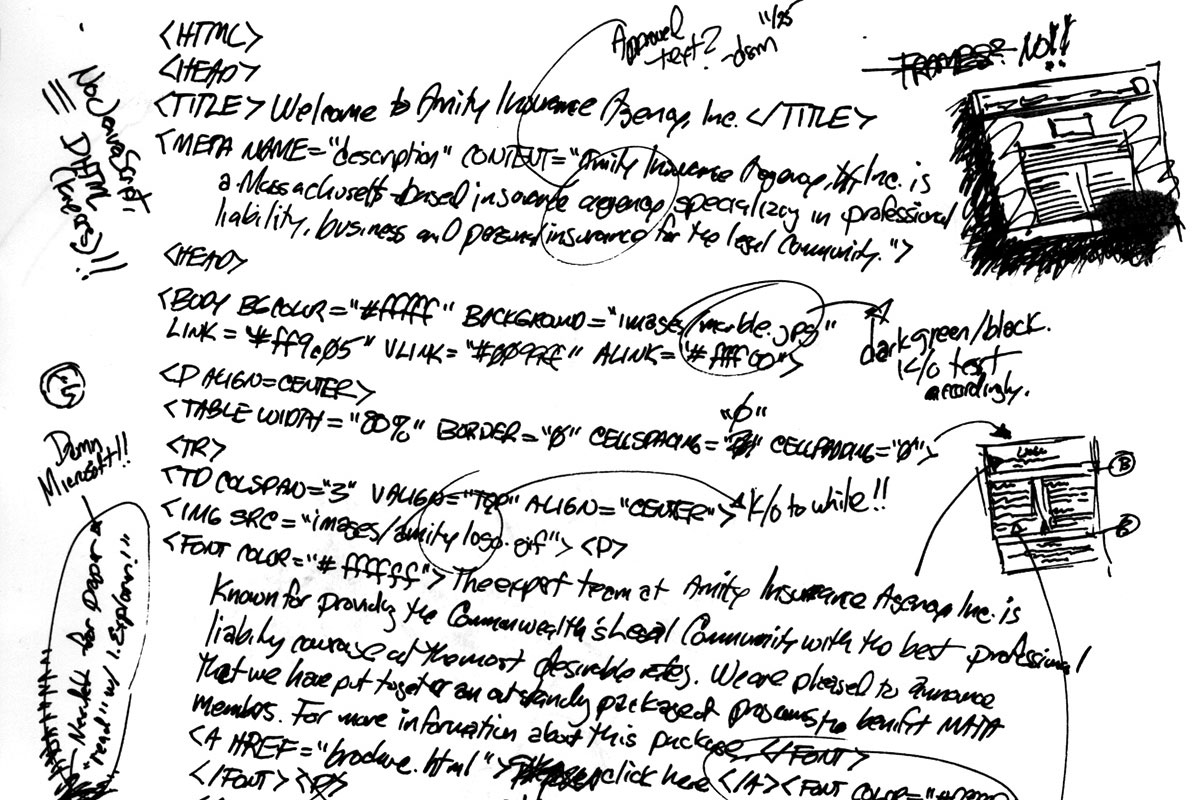
This 1998 hand-drawn HTML worksheet from my sketchbook was created with ink and nib, no pencil phase. It seemed silly at the time, but showing this training exercise at interviews got me a three-year web designer job at Merrill Lynch. Years later, I decided to build an actual web page using period-accurate standards: table layouts, embedded font styles, and optimizations for Netscape Navigator and IE 4.0.
Process
Building actual code as I would have in 1998 took longer than expected, mostly from not remembering pre-CSS syntax (example: background color attribute is "bgcolor" instead of "background-color"). More wasted time was spent looking on Zip drives for images that turned out to be corrupted. What lunatic would even consider that much detail for a goof? Pure development time was probably 45 minutes. Declaring an HTML 4.01 doctype minimized validation errors, but BBEdit still didn't like styles in the body tag or embedded font styles.
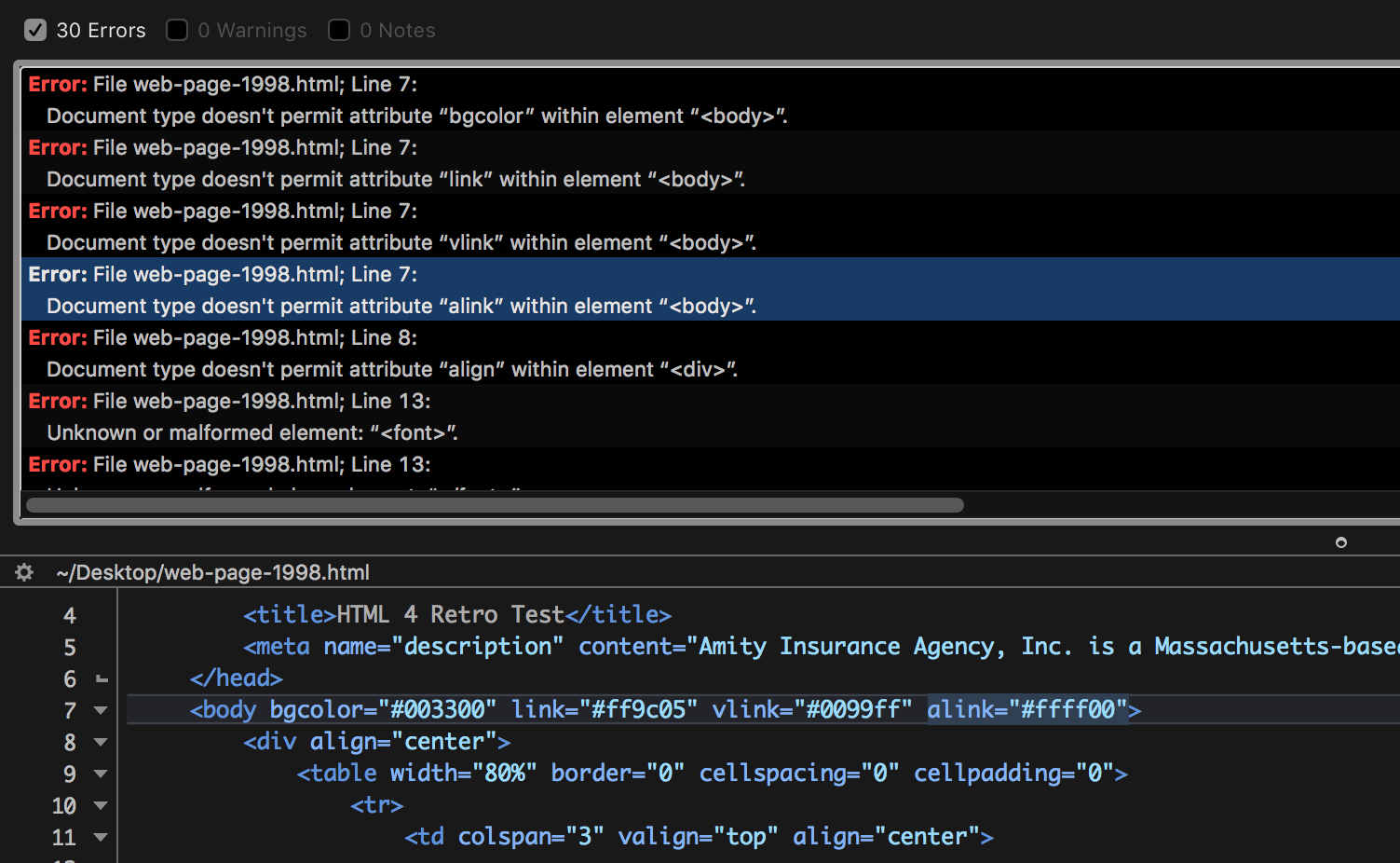
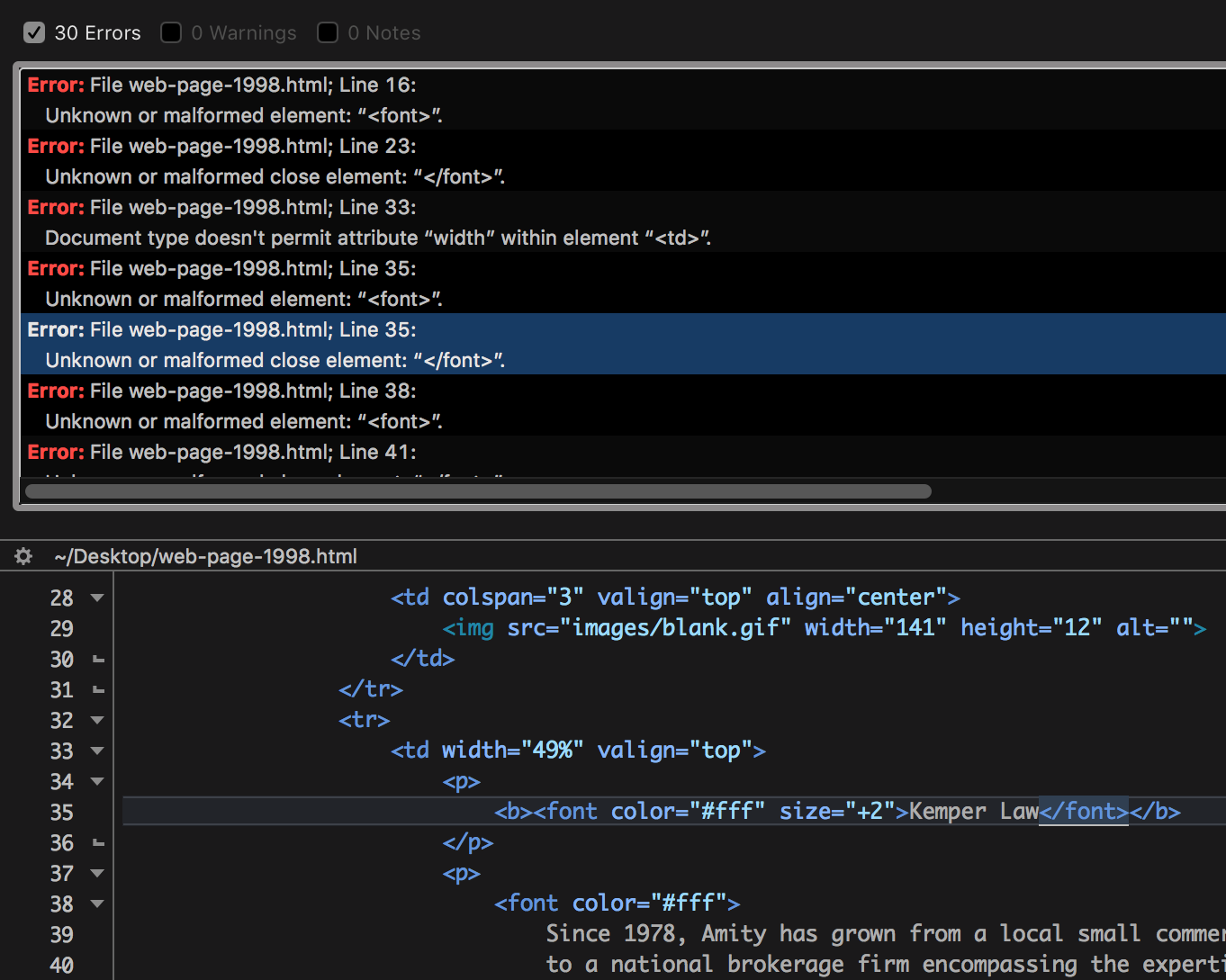
OS 9 screenshots
I couldn't resist a second revision with OS 9 screenshots from my trusty old bronze keyboard PowerBook G3. Running anything with 8 MB of RAM on a 333 MHz processor makes the minutes fly like hours.
Editing

BBEdit Lite 6.1.2
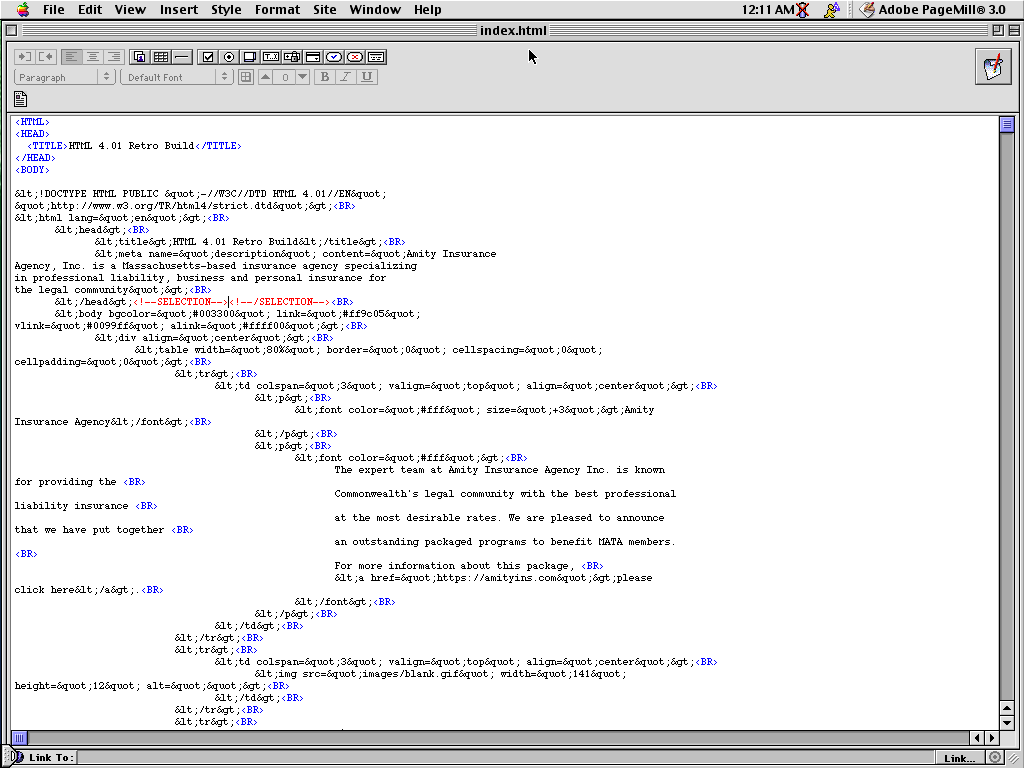
Adobe PageMill 3.0
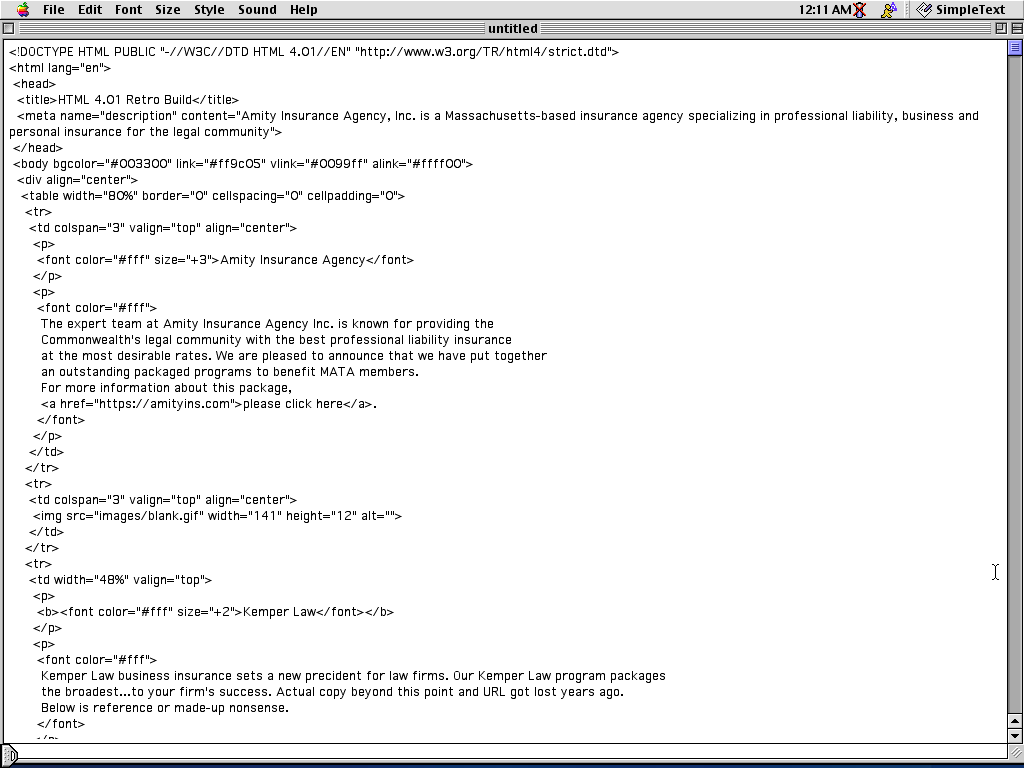
Simpletext 1.4
Display
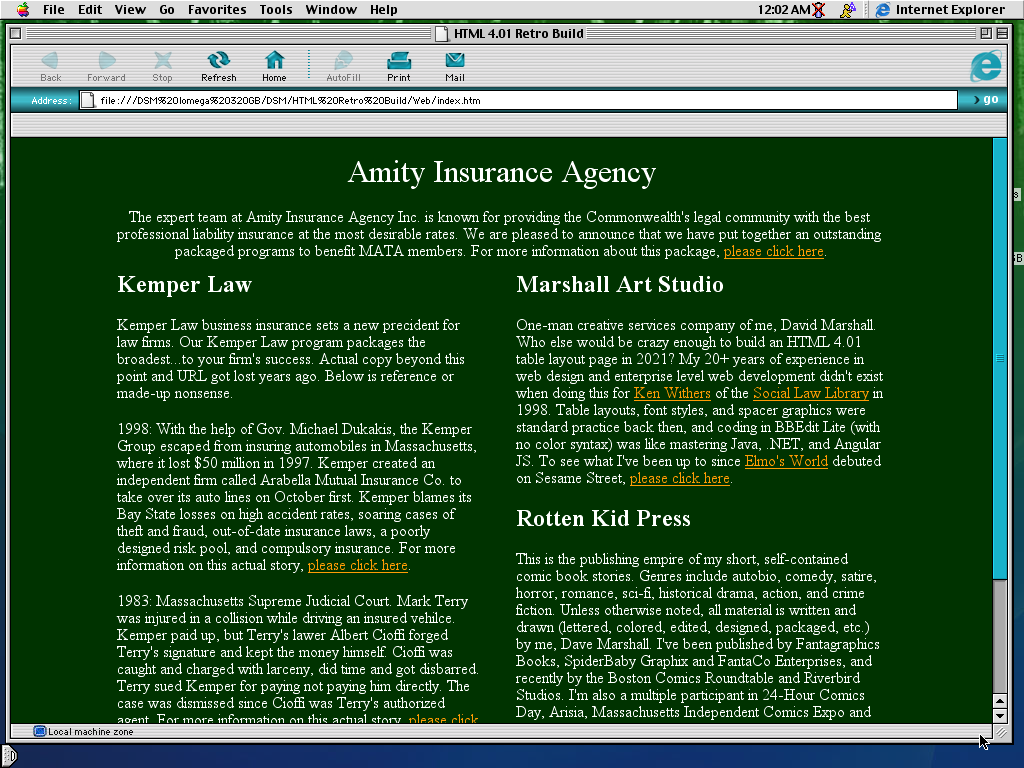
Internet Explorer 5.1.7 for Mac
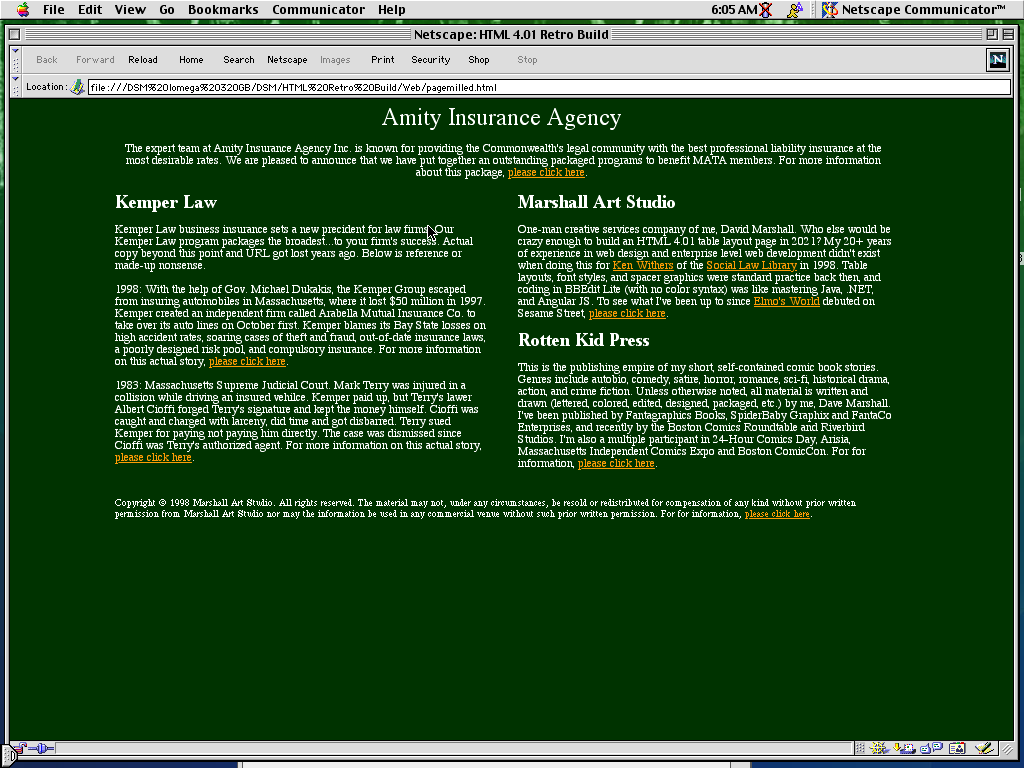
Netscape Communicator 4.79
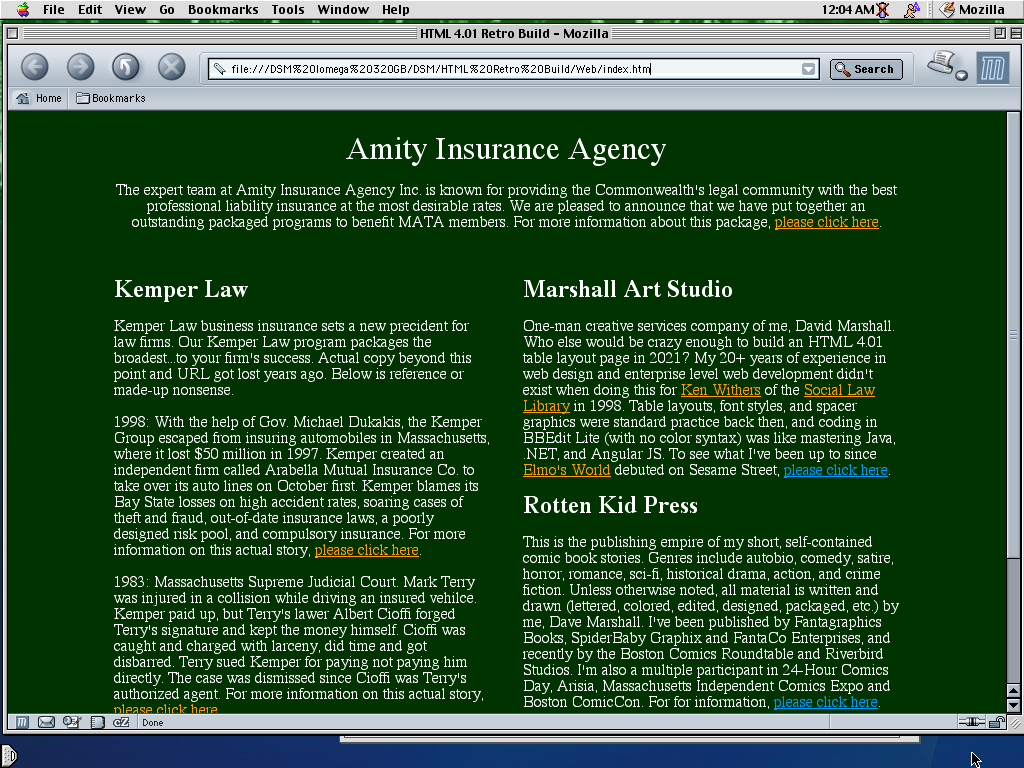
Mozilla 1.2.1
PageMill and Netscape
This only worked once I got rid of modern syntax it didn't understand, like three-letter file extensions and abbreviated hex colors. I still think PageMill was the best WYSIWYG web editor for home users and small businesses before CMS options like Wordpress and blogging technology. It was the HTML version of desktop publishing.


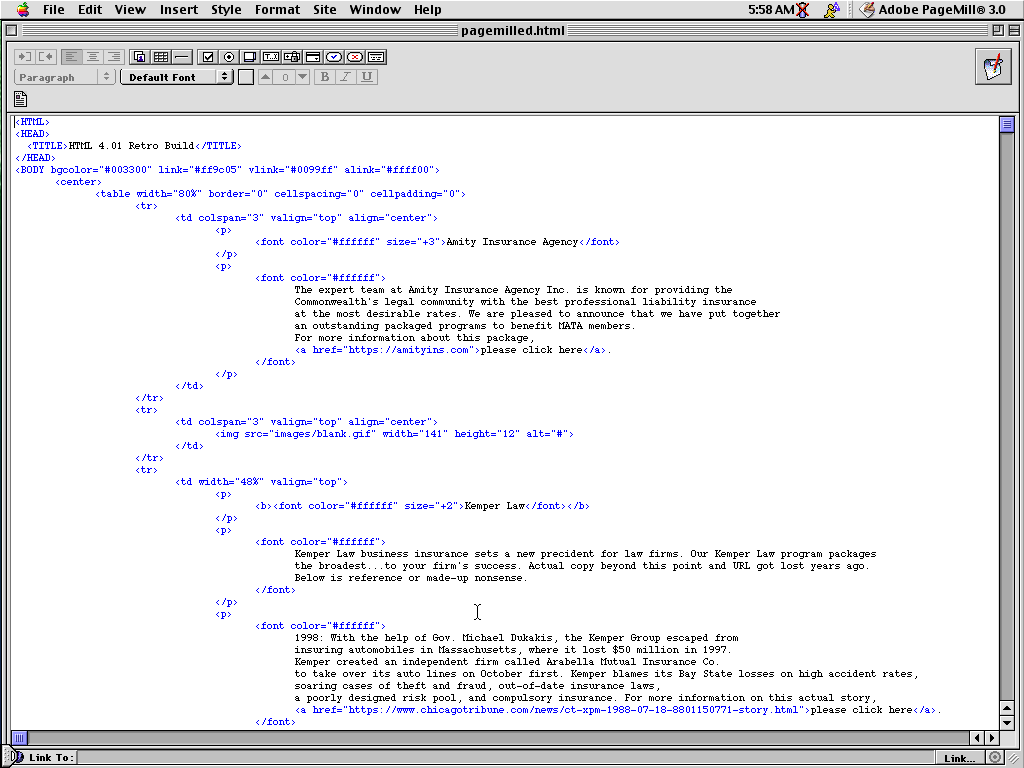
Adobe PageMill source mode

Adobe PageMill WYSIWYG mode
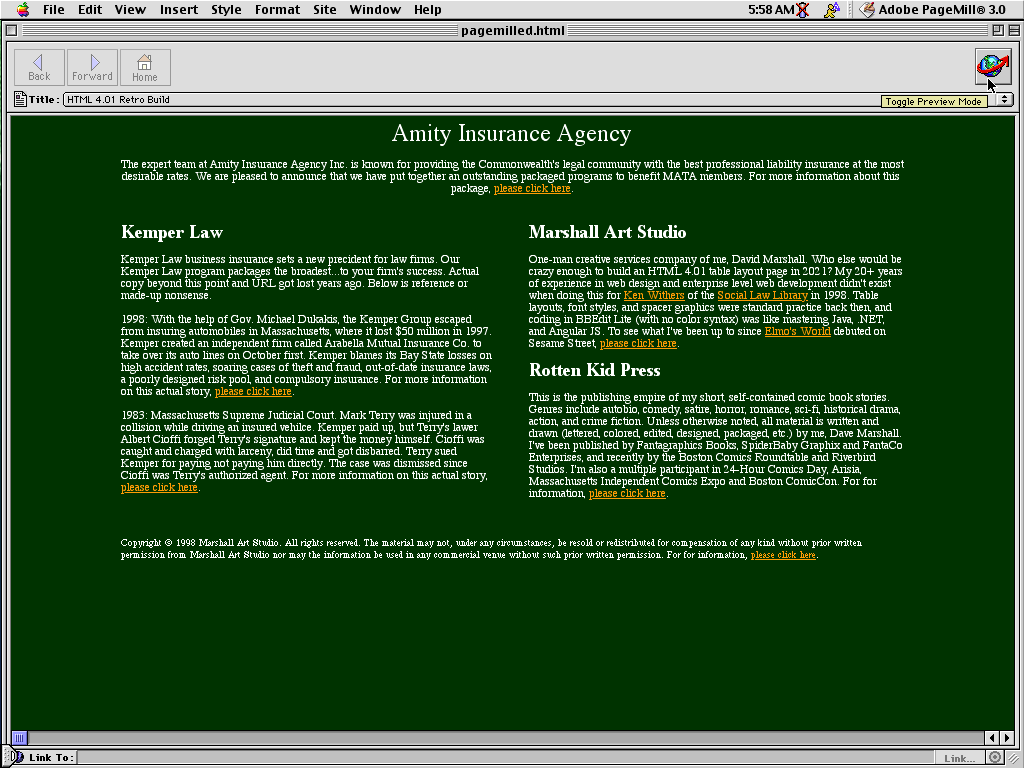
Adobe PageMill preview mode
What did we learn today?
Looking back, the process might be like building raw HTML wireframes from a designer's Photoshopped mockup. Thinking about HTML without a computer might not be crazy after all. What is crazy is embedded styles still being used for HTML emails.
Your HTML historian buddy Dave